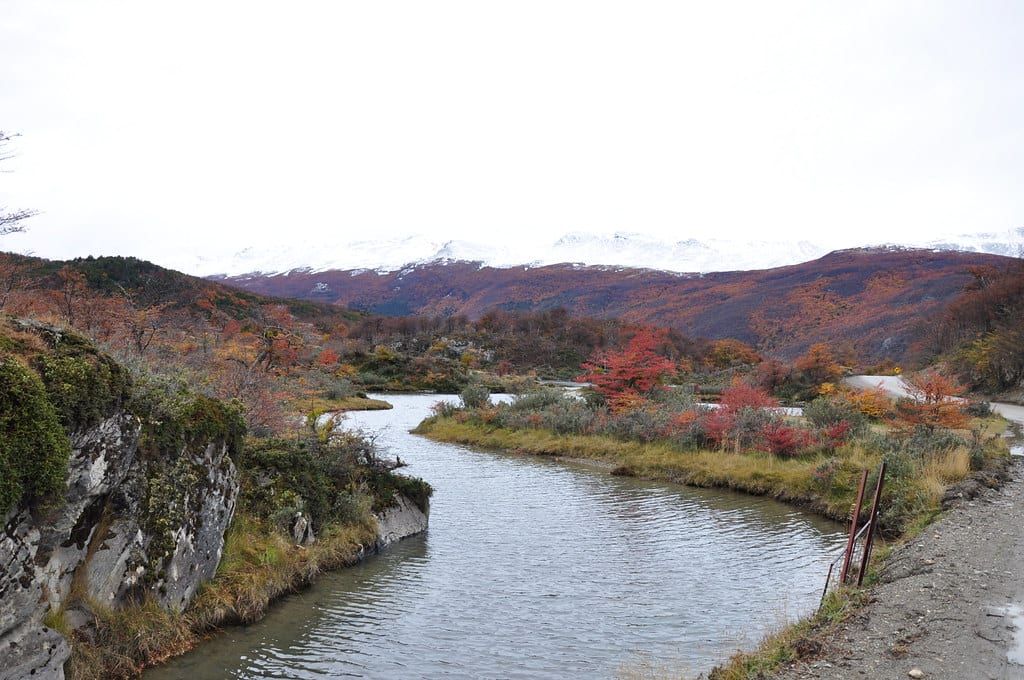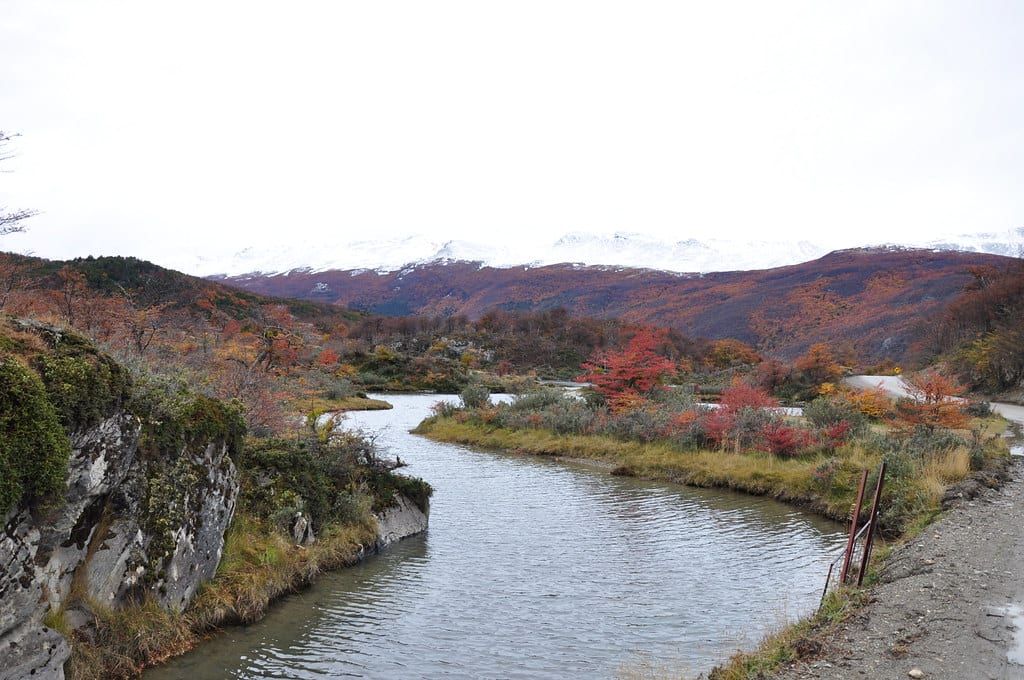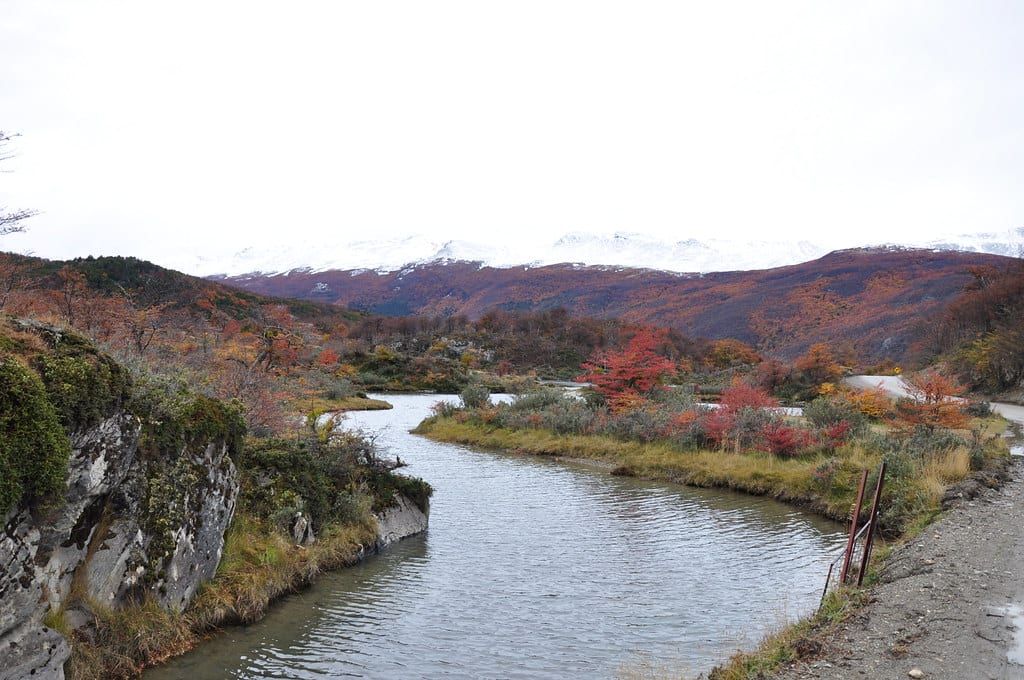
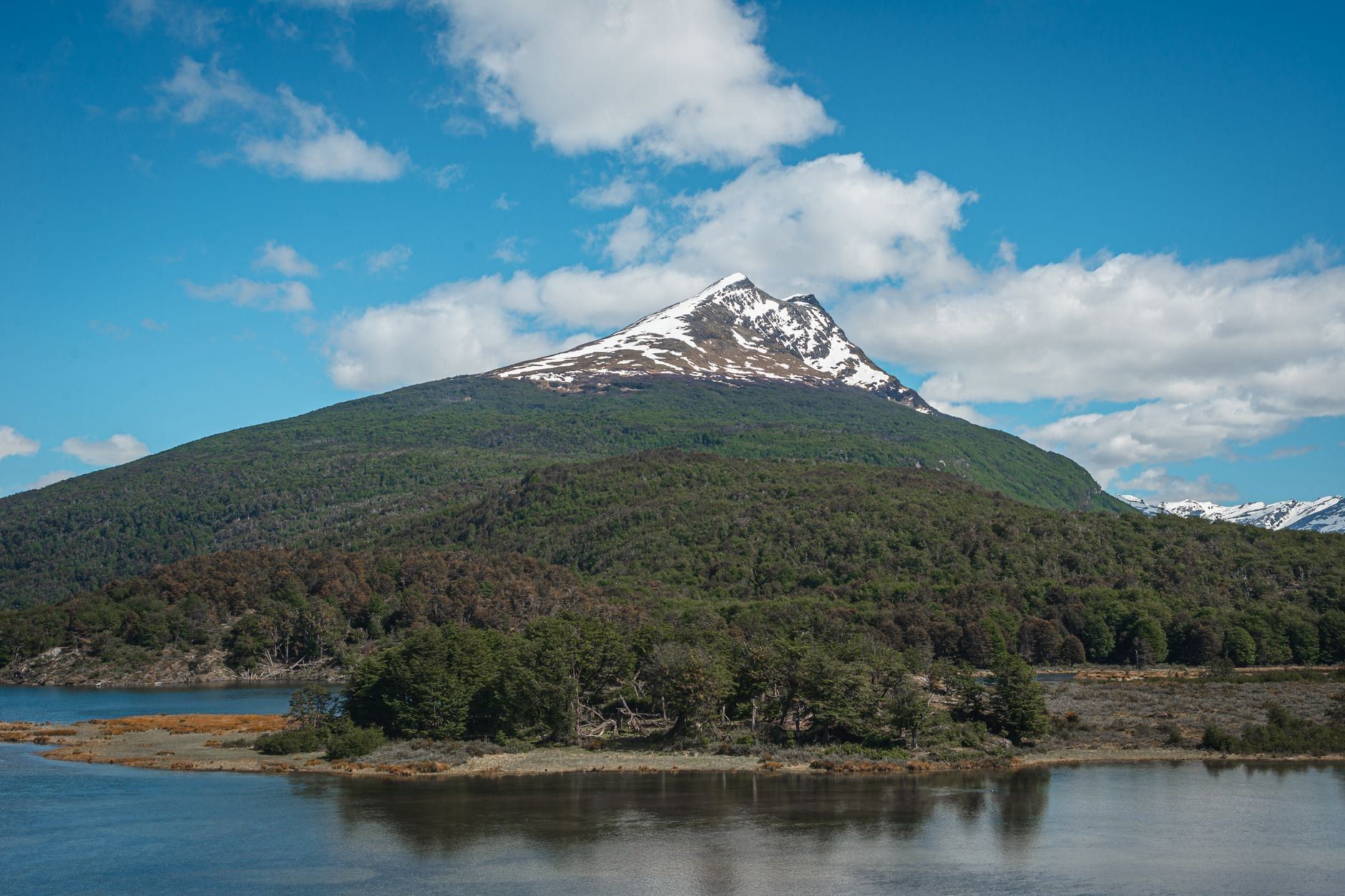
Tierra del Fuego National Park stays open all year — and in winter it empties out. From June to September the lenga forests above the Beagle Channel hold snow, the peat bogs freeze solid, and the boardwalks at Lapataia Bay that queue with cruise passengers in January are walked by a handful of people a day. The trade-off is real: most of the park's longer trails close, daylight shrinks to about seven hours, and you'll need to plan around both.
This guide covers exactly what winter changes — park hours and entry fees, which trails stay open, how to get there when roads are gravel and icy, and what a realistic snowy half-day looks like.
Is Tierra del Fuego National Park Worth Visiting in Winter?
Yes — if you're coming for snow, not for the full trail network. Winter turns the park into something summer visitors never see: subantarctic beech forest bent under fresh snow, frozen black bogs, and windless days when the Beagle Channel lies flat and grey-green. You'll have the viewpoints nearly to yourself, which is the whole argument for going.
It suits three kinds of travelers. Skiers at Cerro Castor who want a half-day of non-ski scenery. Photographers chasing low golden light on snow — the sun barely clears the ridgeline, so the good hours last all day. And anyone waiting out a few days in Ushuaia before or after an Antarctic departure, since the park is only 12 km from downtown.
The honest downsides: roughly seven hours of usable daylight, most long trails officially closed, sparse services inside the park, and itineraries that can shift with a storm. If your heart is set on the 8 km coastal hike or the Cerro Guanaco summit, come between November and March instead — our park history and highlights overview covers what the full season looks like.
For context: the park protects 68,909 hectares at the southern tip of Isla Grande, established in 1960 and expanded in 1966. It's the only Argentine national park where mountains, forest and sea coastline meet, and Lapataia Bay holds the southern end of National Route 3 — the road sign marking the terminus, 3,079 km short of Buenos Aires, is the most photographed object in the park. The name itself comes from the Yámana (Yaghan) people, whose campfires along the shore made the first European sailors call this the Land of Fire. Their shell middens still rise along Lapataia's boardwalks.
Winter Weather, Daylight, and the Best Months to Go
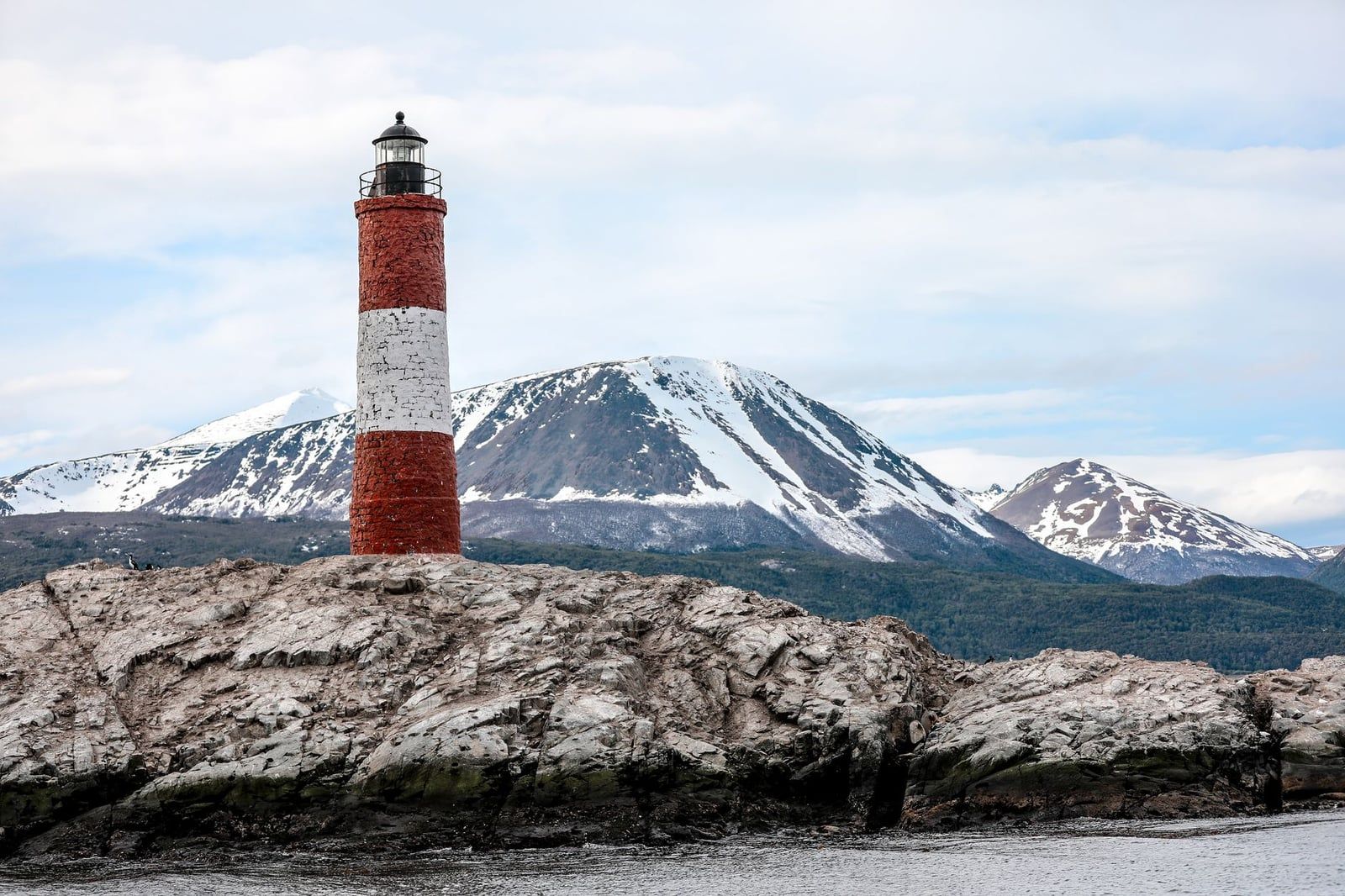
Snow season runs June through September, heaviest in July and August; Ushuaia averages about a meter of snowfall across the year. Winter temperatures sit between -2°C and 5°C (28–41°F) and can drop below -10°C (14°F), but the number that shapes your day is the wind. Averages around 31 km/h, with harder gusts on exposed shore sections, make 0°C feel far colder than the thermometer says.
The oceanic climate keeps things milder than the latitude suggests — the park's annual average is about 5.6°C, chilly and humid year-round, with snow accumulating at altitude from May onward. Weather also swings fast. Sun to sleet inside an hour is normal, so build slack into any plan.
Daylight is the hard constraint. Expect around seven hours, with the practical sightseeing window running roughly 9:30 to 17:00 and sunset near 5 pm. Start early, keep the park to a half-day window, and treat anything after 16:00 as bonus time.
Month by month: June brings early snow and the shortest days. July and August deliver the deepest snow and the core ski season — the best months if snow scenery is the point. September stretches the days back out and mixes spring snow with longer light; it's the smart pick if you want winter looks with less schedule pressure. And because Beagle Channel cruise navigation runs November to March, winter visitors get the near-empty version of the park that summer crowds never see.
Park Hours, Entrance Fees, and Tickets in Winter
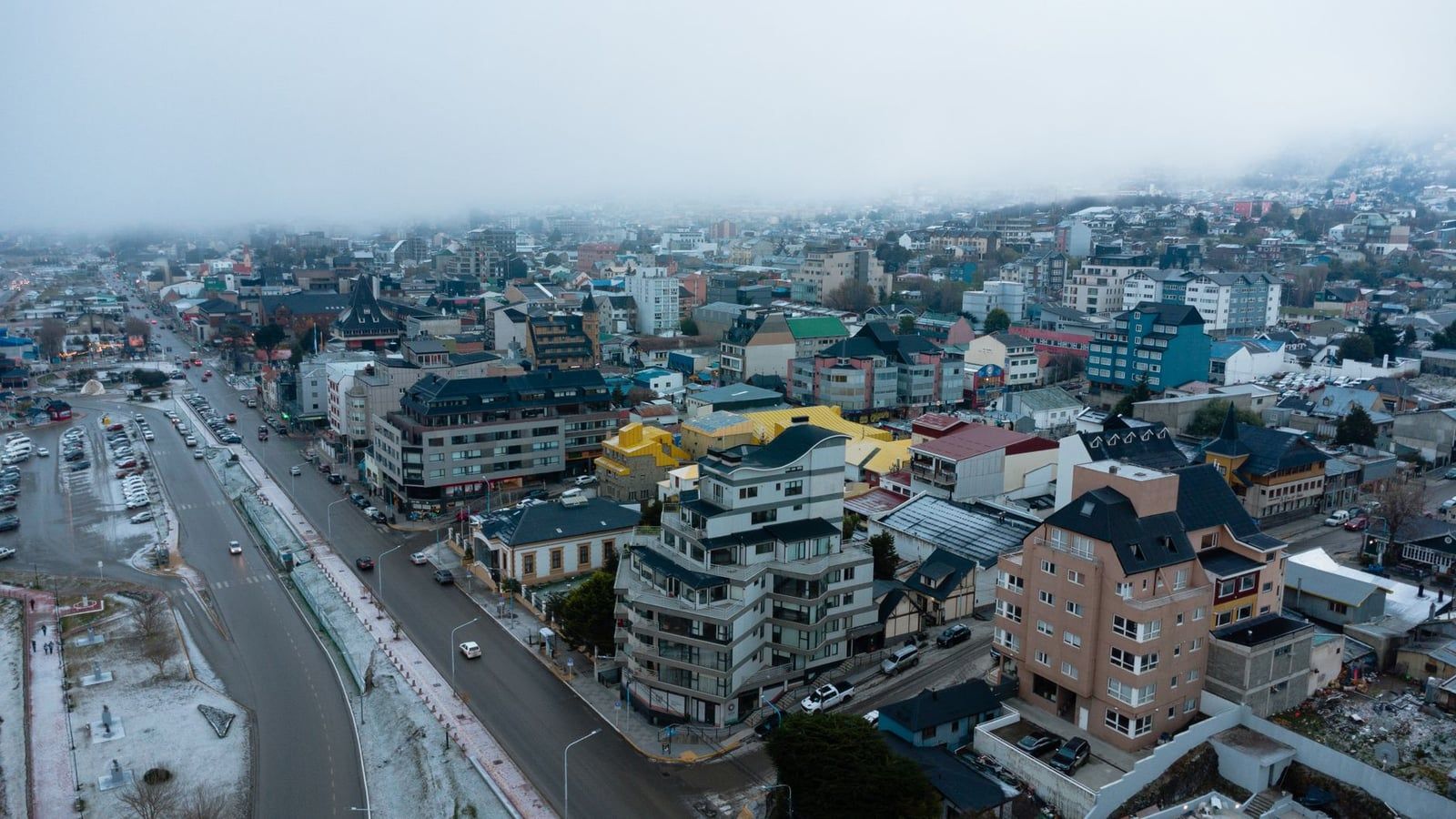
The park opens every day of the year, but hours are seasonal: from April to September, entry and exit run 9:00 to 18:00. That posted schedule still bends to weather — heavy snow or icy roads can restrict access regardless of what the sign says, so check conditions the morning you go.
One correction worth making loudly: older guides still claim park entry is free from May 1 to September 30. It isn't. The current APN tariff, effective June 1, sets the general daily rate at ARS 40,000 — and Argentine park fees move with inflation (guides quoted ARS 62,000 in early 2025 and AR$30,000 in March 2026), so verify the official APN tariff page the week you travel.
| Category | Daily rate |
|---|---|
| General (foreign and non-resident visitors) | ARS 40,000 |
| Argentine residents | ARS 18,000 |
| Tierra del Fuego provincial residents | ARS 8,000 |
| Eligible students | ARS 12,000 |
| Children through age 6, Argentine retirees with DNI, visitors with a CUD disability certificate, Malvinas veterans | Free |
Buy tickets either at the gate or online through Argentina's official parks system at ventaweb.apn.gob.ar. Online tickets are nominal and non-transferable, with no changes or refunds — the passport or DNI you book with must match the document you carry, so type carefully. At the gate, cards are accepted but connectivity is patchy; carry pesos as backup.
Money-savers if you're staying longer: a second consecutive day is discounted, and 3-day and 7-day Flexipasses plus an annual pass exist. Note that the End of the World Train is a completely separate ticket.
Inside the park, the Alakush Visitor Center is the only real service point — interpretive hall, café, restrooms and shop, open roughly 10:00 to 17:30. There's no park-wide Wi-Fi and mobile signal is limited, so download your ticket and offline maps before you leave town.
How to Get There in Winter: Drive, Shuttle, or Tour
The entrance sits on National Route 3, about 12 km west of downtown Ushuaia — 15 to 25 minutes of driving. Inside the boundary the roads are gravel, and official guidance is blunt: in winter your vehicle must be equipped with snow tires or chains. Route 3 also carries the park's speed limit of 40 km/h, because rabbits, foxes and guanacos cross constantly. Our full transport and routes guide covers the details.
Self-drive gives you the most freedom — free parking at each sight, unhurried photo stops, and the option to bail when weather turns. It's a bad idea if fresh snow is falling and you've never fitted chains. Rental agencies in Ushuaia provide winter equipment; confirm before you drive off.
By shuttle, a regular service departs downtown from the corner of Fadul and Maipú on fixed schedules, running about 45 minutes with stops at seven points inside the park, including Alakush and Bahía Lapataia. A return ticket ran about ARS 20,000 cash (AR$25,000 by card) as of early 2025 — confirm the current fare and timetable, since winter frequencies thin out. Public transport is otherwise oriented toward park staff and irregular.
For most winter visitors, a guided half-day excursion is the default, and it's the choice we'd recommend: transport handled, a bilingual guide who knows the snow conditions, and a group buffer against the short daylight. These run about 4–5 hours with daily departures, listed around ARS 110,000 depending on operator. One catch to budget for: park admission is almost never included — pay it separately. You can compare tours from Ushuaia to see what each includes.
What's Actually Open: Trails and Attractions in Winter
The rule of thumb: viewpoints, short shore walks and boardwalks, yes; long backcountry routes, no. The park officially closes its headline trails for winter — Senda Costera, Cerro Guanaco, Pampa Alta and Cascada Río Pipo — along with the Ensenada Zaratiegui and Río Pipo access roads, all because of ice. Never bypass a closed trailhead; the closures are posted for reasons that become obvious about a kilometer into a frozen forest.
| Route | Distance and difficulty | Winter status |
|---|---|---|
| Senda Costera (coastal trail) | 8 km one way, 3–4 h, moderate | Closed |
| Cerro Guanaco | 8 km round trip to 975 m, hard | Closed |
| Pampa Alta | 5 km, 3–4 h, moderate | Closed |
| Cascada Río Pipo | Short walk to a waterfall | Closed |
| Lapataia Bay walkways (Mirador Lapataia, Paseo de la Isla) | 900–950 m, easy | Open — icy, walk with caution |
Lapataia Bay is the winter core, and it delivers. The short interpretive walkways — Mirador Lapataia at 950 m, Paseo de la Isla at 900 m — pass the Yámana shell middens and cormorant islets and end at the famous end-of-route sign. Under snow, with the channel beyond, it's the single best scene in the park. Boardwalks ice up, so watch your footing.
Ensenada Zaratiegui, home of the End of the World Post Office, sits on a side road that's officially closed in winter — check current access before counting on the passport stamp. Lago Acigami, the park's largest freshwater lake, shared with Chile, is reachable from the main road via its parking area; treat only the immediate shoreline as realistic. The Alakush viewpoint above the visitor center rounds out a sensible winter loop.
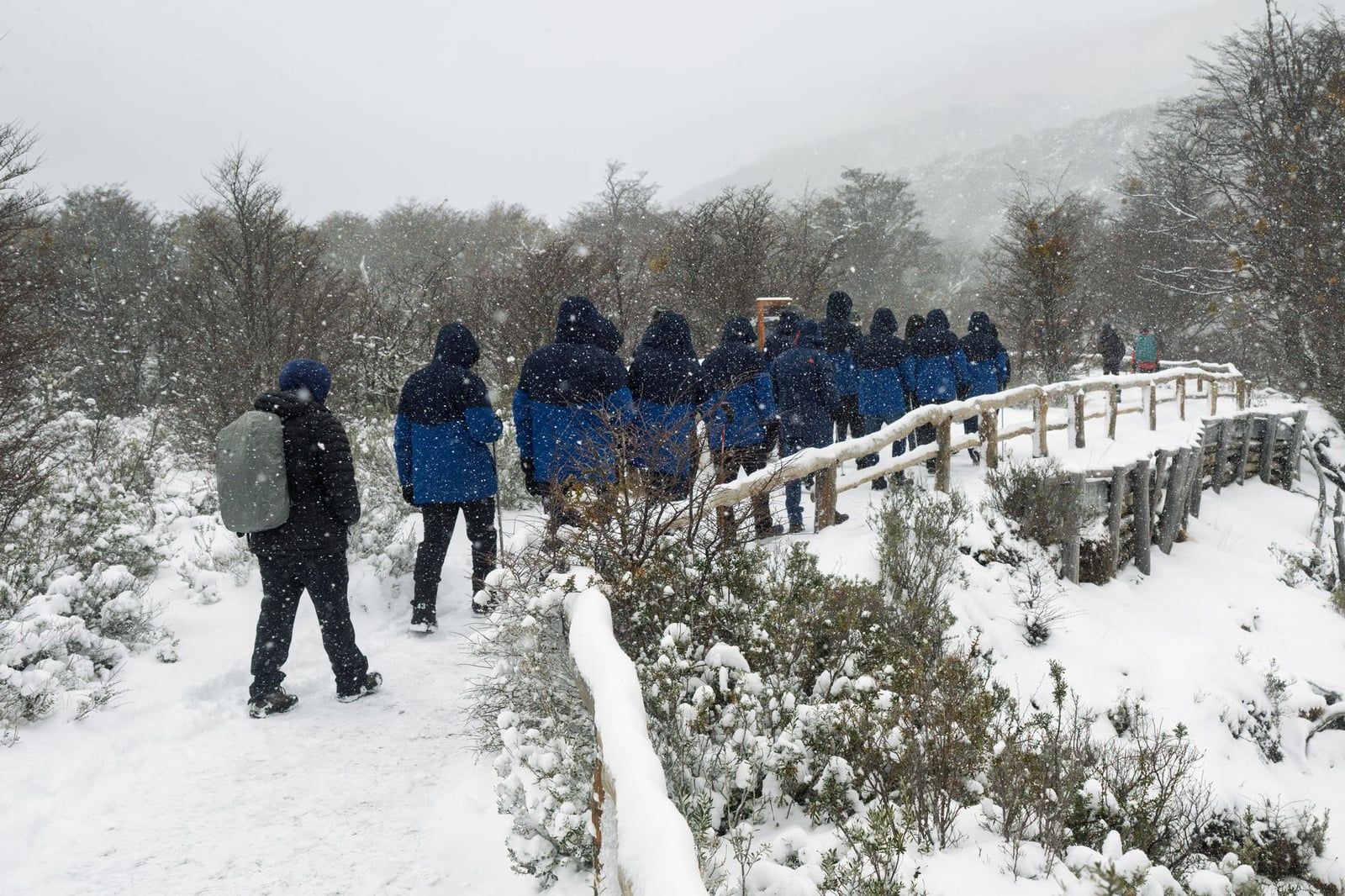
For a half-day: Alakush first, then the Lapataia walkways, then the Acigami shoreline if time and light allow. A full day adds the train (below) and generous weather buffer, but honestly the half-day version covers everything that's open. Guided groups are the safest format — route knowledge, current snow conditions, and a daylight margin you won't manage alone. If bigger hikes are your reason for coming, save them for the summer hiking season.
Best Things to Do in the Park in Winter
Here's what a winter visit actually consists of — scoped to the park boundary, with the near-park snow activities sorted out at the end.
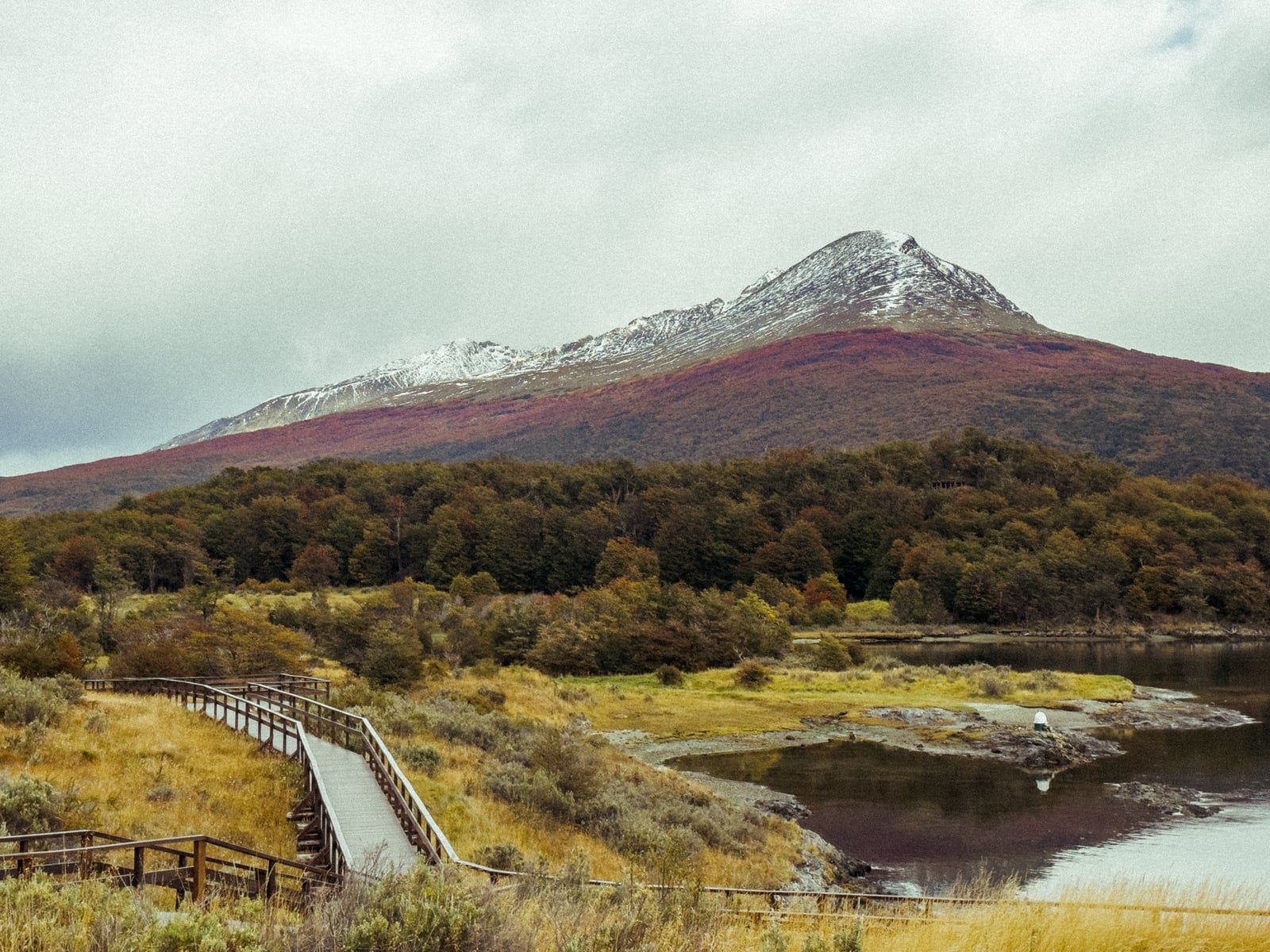
Snow photography in the lenga forest
Bare, snow-bent lenga and guindo beech against frozen black bogs is the park's signature winter composition, and the low-angle light from ~10:00 to 15:00 keeps shadows long all day. Work the Lapataia walkways and the Acigami shoreline. One rule: drones are prohibited in Argentine national parks without special APN authorization, so leave it in the bag.
Winter wildlife watching
Bare branches and empty trails make winter the easier season to spot the year-round residents: guanacos, the Fuegian red fox, condors overhead, Magellanic woodpeckers drumming on dead lenga, austral parakeets, and steamer ducks and kelp gulls along the shore. Move slowly near the Lapataia boardwalks early in the day and keep your distance — a fox working the shoreline is worth more minutes than the sign.
Huillín — the river otter — also lives here year-round, though you'd be lucky to see one. Bring binoculars; the parakeets give themselves away by sound.
Riding the End of the World Train
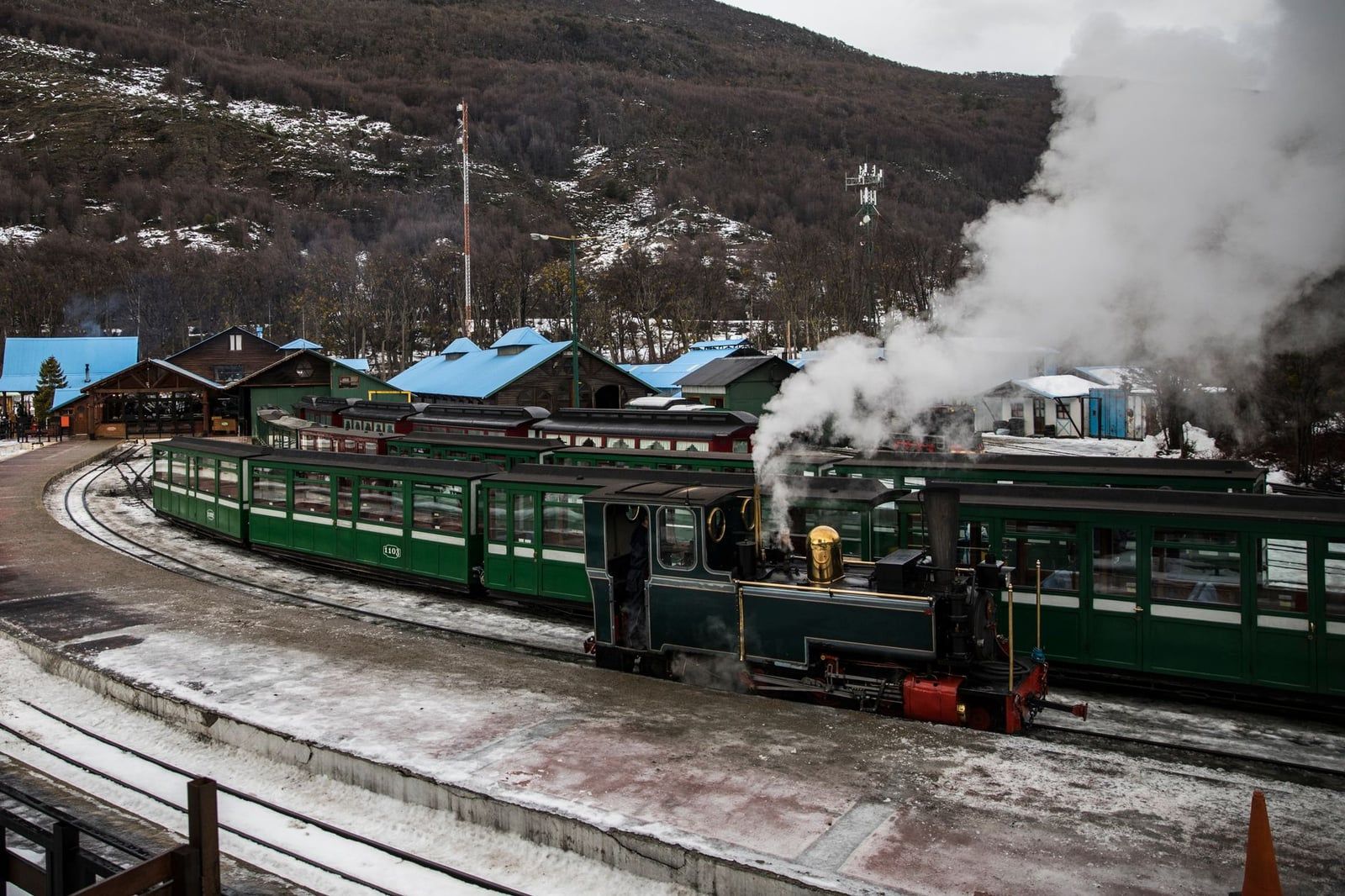
The Tren del Fin del Mundo runs the final 7 km of the old Ushuaia prison railway — wooden rails from 1902, narrow gauge from 1910, revived as a heritage train in 1994 — from a station 8 km from downtown, before the park entrance. It stops at the La Macarena cascade and the Tree Cemetery, with an audio guide in ten languages. Departures run at 9:30, 12:00 and 15:00 from September through April; from May to August, departures depend on availability, so pre-book. Tourist class costs ARS 70,000. The fare never includes park admission — budget both.
The classic pairing is train one way into the park, then a guided visit or shuttle back. Winter multi-day itineraries do exactly this, riding the train and walking Lapataia on the same day.
What replaces canoeing and kayaking
Canoeing on Lago Acigami and the Lapataia and Ovando rivers is a warm-season staple — inflatable canoes with licensed operators only, and private kayaks are banned outright. In winter, guided visits swap the water for short snowshoe-style walks on the same terrain. If paddling matters to you, that's a November-to-March plan.
Near-park winter activities — and why they're not in the park
Most "winter in Tierra del Fuego" listicles blur the boundary. To be clear: dog sledding, snowmobile rides, snowshoe treks over frozen peat bog and torch-lit dinners all operate out of the Tierra Mayor valley, outside the national park. The popular 4x4 lake trips go to Fagnano and Escondido — also outside. All are good uses of a Ushuaia winter afternoon; none of them happens inside the park boundary.
Which gives you the classic winter day formula: a half-day park tour in the morning, when the light is best and the boardwalks are quiet, and a Tierra Mayor snow activity in the afternoon. Skiers invert it — Castor all day, park half-day on a rest morning.
What to Pack and Winter Safety in the Park
Dress for wind and wet, not for the thermometer. Base layer, fleece, insulated jacket, and a windproof shell on top; beanie and gloves. Waterproof insulated boots matter more than anything else — the boardwalks ice up and a fall on a frozen plank is the most common way a winter visit goes wrong. Sunglasses for the low sun and snow glare, and a headlamp, because dark arrives near 5 pm.
Carry snacks and water. The Alakush café shuts around 17:00, and outside its hours there are no services in the park. Bring your passport or DNI — you need the physical document matching your online ticket, and it's required for any discount or free category.
Safety basics: tell your hotel your plan and expected return, expect sudden weather changes, and stay on open marked routes. Guided groups remain the safest format in snow. Park rules apply year-round — pack out all trash, don't alter terrain, avoid fires unless strictly necessary (portable stoves preferred; only charcoal or commercial firewood if a fire is unavoidable), and keep distance from wildlife.
And the definitive camping answer: the former Lake Roca campground closed in 2016 for conservation reasons, and no camping areas currently operate in the park. Winter visits are day trips — base yourself in Ushuaia, 12 km away.
Frequently asked questions
Is Tierra del Fuego National Park open in winter?
Yes — the park is open every day of the year, including holidays. From April to September, hours are 9:00 to 18:00. Snow and icy roads can still restrict access or close specific trails regardless of posted hours, so check conditions that morning.
How cold does it get in winter?
Winter averages run between -2°C and 5°C (28–41°F), with cold snaps below -10°C (14°F) and significant wind chill — average winds around 31 km/h make it feel much colder. Daylight lasts about seven hours.
Can you hike in the park in winter?
Only in a limited way. The Lapataia Bay short walks and boardwalks (Mirador Lapataia, Paseo de la Isla) are the realistic winter option. Senda Costera, Cerro Guanaco, Pampa Alta and Cascada Río Pipo are officially closed for the season, and guided tours are the safest way to visit.
How much is the winter entrance fee?
ARS 40,000 per day for general (foreign and non-resident) visitors, despite outdated articles claiming winter entry is free. Argentine residents pay ARS 18,000, provincial residents ARS 8,000, students ARS 12,000; children through age 6, Argentine retirees with DNI, and visitors with a CUD certificate enter free. Fees change with inflation — verify the APN tariff page before travel.
Do you need snow chains to drive to the park in winter?
Yes — official guidance requires vehicles to be equipped with snow tires or chains in winter, since park roads are gravel. Shuttles and guided tours remove the hassle entirely.
Does the End of the World Train run in winter?
It runs, but reduced: scheduled departures (9:30, 12:00, 15:00) run September through April; from May to August, departures depend on availability, so pre-book. The train ticket (ARS 70,000 tourist class) never includes park admission — the two are separate purchases.
What animals can you see in the park in winter?
Year-round residents include guanacos, the Fuegian red fox, Andean condors, Magellanic woodpeckers, austral parakeets, steamer ducks and kelp gulls along the Beagle Channel shore. Bare trees and empty trails make them easier to spot than in summer.
Can you camp in the park in winter?
No. The Lake Roca campground closed in 2016 for conservation reasons and no camping areas currently operate in the park — winter visits are day trips with overnight stays in Ushuaia.