
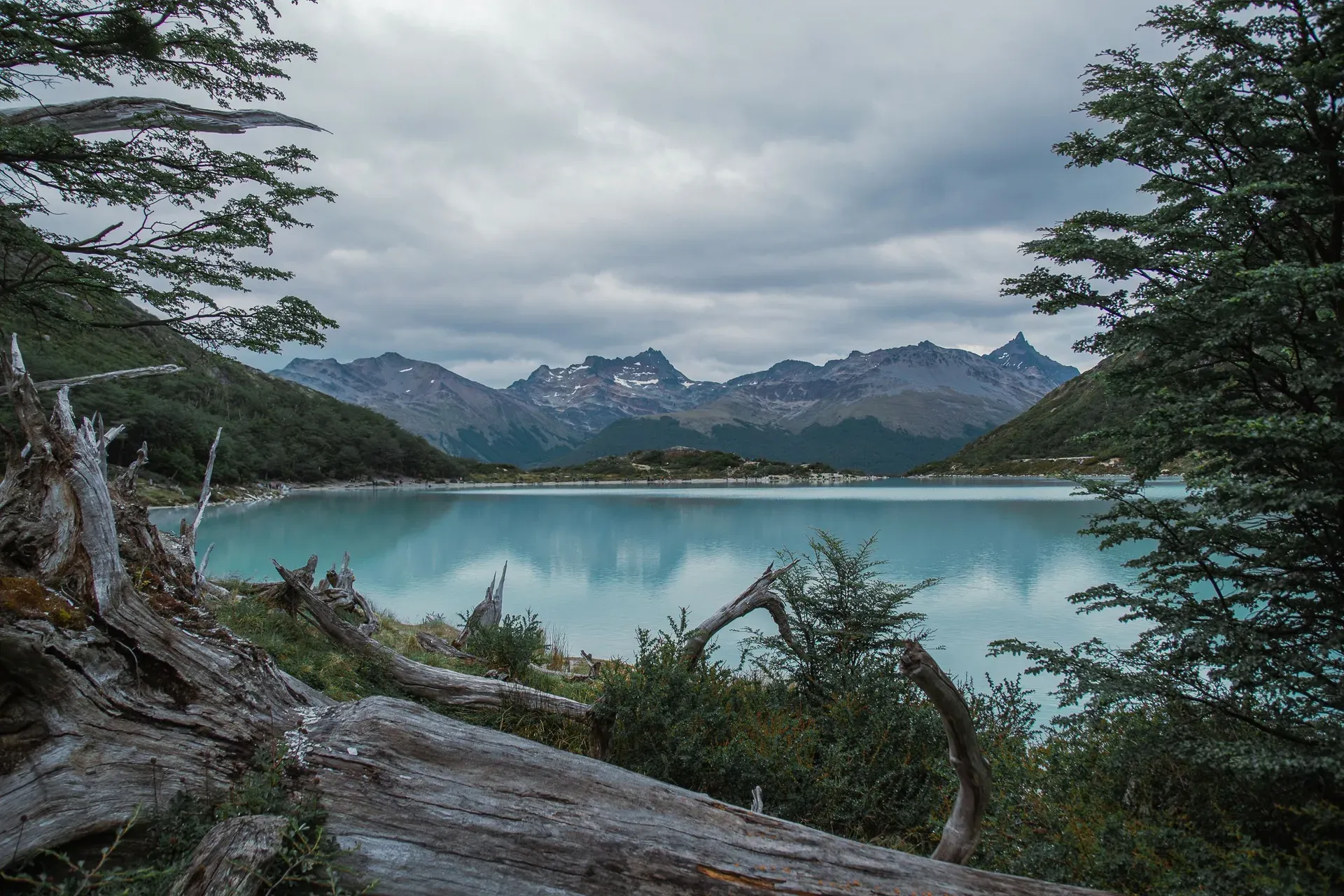
Entry to Tierra del Fuego National Park is paid — AR$40,000 for foreign visitors under the official rates effective 1 June 2026 — and the park opens daily, year-round. Hours shift with the seasons: 8:00–21:00 in the December–February summer, 9:00–18:00 through the austral winter.
Tierra del Fuego National Park is open every day of the year, with entry hours that shift by season: 8:00–21:00 from December through February, 8:00–20:00 in March, October and November, and 9:00–18:00 from April through September. There are no closed days. Plan around the seasons rather than the calendar — winter brings shorter hours and official trail closures.
Swipe to see more
| Day | Hours | Note |
|---|---|---|
| Monday–Sunday (December–February) | 08:00–21:00 | Austral summer hours. Up to 17 hours of daylight; all trails and access roads open. |
| Monday–Sunday (March, October, November) | 08:00–20:00 | Shoulder-season hours. Similar conditions to summer with fewer crowds. |
| Monday–Sunday (April–September) | 09:00–18:00 | Winter hours. Cerro Guanaco, Pampa Alta, Senda Costera and Cascada Río Pipo trails, plus the Ensenada Zaratiegui and Río Pipo access roads, are officially closed due to ice. |
| Alakush Visitor Centre (daily, year-round) | 10:00–17:30 | Restaurant, gift shop, restrooms and information desk. Outside these hours, services inside the park are scarce. |
| End of the World Train station (1 September–30 April) | 08:30–17:15 | Departures at 9:30, 12:00 and 15:00; arrive 45 minutes early. May–August departures depend on availability. Park entry not included in the fare. |
The park does not close for national or religious holidays — it opens daily, year-round, so Christmas and Argentine holidays follow the normal seasonal schedule. The closures that matter here are seasonal, not festive: from April through September the icy conditions shut several trails and access roads, and the End of the World Train drops to on-request departures from May to August. Confirm current trail status at argentina.gob.ar or by emailing [email protected] before a winter visit.
Entry to Tierra del Fuego National Park costs AR$40,000 for foreign and non-resident visitors (official APN rate effective 1 June 2026). Argentine residents pay AR$18,000, Tierra del Fuego provincial residents AR$8,000, and students AR$12,000. Buy tickets online at ventaweb.apn.gob.ar or at the gate, and check the official site the week you travel — prices shift often with inflation.
Swipe to see more
| Category | Price | Note |
|---|---|---|
| General (foreign / non-resident visitors) | AR$40,000 | Official APN rate effective 1 June 2026 |
| Argentine national resident | AR$18,000 | DNI required |
| Tierra del Fuego provincial resident | AR$8,000 | DNI required |
| Student | AR$12,000 | Valid student ID required |
| Argentine retiree / pensioner | Free | Must show DNI |
| Visitor with a disability | Free | CUD certificate or equivalent foreign document |
| Malvinas War veteran | Free | |
| Accredited Argentine school group | Free | |
| End of the World Train — tourist class adult (add-on) | AR$70,000 | Park entry not included; departures 9:30, 12:00 and 15:00 from 1 September–30 April |
| End of the World Train — child 4–12 (add-on) | AR$35,000 | Park entry not included |
| End of the World Train — premium class (add-on) | AR$217,000 | Park entry not included |
| Flexipass / annual pass | Varies | 3-day and 7-day Flexipass plus annual passes are sold; check ventaweb.apn.gob.ar for current pricing |
No regular free-entry days; free access is limited to exemption categories (Argentine pensioners, visitors with a disability certificate, Malvinas veterans, accredited school groups), while multi-day Flexipass and annual passes offer better value for repeat visits.
Planning your visit to Tierra del Fuego National Park? Find tours with free cancellation and skip-the-line options.
View All ToursDecember through February is the best time to visit: daytime highs reach 13–14°C, daylight stretches to 17 hours, and every trail and access road is open. It's also the busiest stretch, since it coincides with penguin season (October–March) on the Beagle Channel. October–November and March deliver much the same conditions with noticeably fewer people and lower prices.
Swipe to see more
| Period | Crowd Level | Recommendation |
|---|---|---|
| Early morning (08:00–10:00) | Low | You'll have boardwalks at Bahía Lapataia and the short trails nearly to yourself, and the wind tends to be at its gentlest — ideal for photographers and anyone hiking Senda Costera before the tours arrive. |
| Mid-morning (10:00–12:30) | High | Half-day tour groups and the 12:00 train arrival fill Ensenada Zaratiegui and the post office line, so this window suits visitors who want services at full tilt rather than solitude. |
| Early afternoon (12:30–15:30) | High | The 15:00 train departure and the shuttle loop keep Lago Acigami and Alakush busy; plan lunch at the visitor centre (open roughly 10:00–17:30) before continuing to the bay. |
| Late afternoon (15:30–18:00) | Moderate | Most half-day tours have turned back toward Ushuaia, leaving quieter conditions for the Paseo de la Isla and Mirador Lapataia walks — good for families with energy left. |
| Evening (18:00–21:00, December–February only) | Low | Summer closing time is 21:00, and the last hours belong almost entirely to campers and slow light — the long dusk is the best moment at the Route 3 end-of-the-road sign. |
Plan on 4–5 hours for the standard visit — that covers the shuttle loop, the End of the World Post Office at Ensenada Zaratiegui, the short trails and Bahía Lapataia, where Route 3 dead-ends at the sign. Guided half-day tours from Ushuaia run 4–5.5 hours. Give it a full 6–8 hours if you want the 8 km Senda Costera coastal hike, and hikers adding the Cerro Guanaco climb (8 km round trip to 975 m) should budget a full day or come back twice.
Skip the gate queue by purchasing at ventaweb.apn.gob.ar before you leave Ushuaia, and carry your passport or DNI — you'll need it to claim the discounted or free categories (students pay AR$12,000, Argentine pensioners enter free). Prices move fast with inflation; the official rate was AR$30,000 in March 2026 and jumps to AR$40,000 from 1 June 2026, so check the official site the week you travel rather than trusting older blog figures.
December through February the park runs 8:00–21:00 with up to 17 hours of daylight — enough for the 8 km Senda Costera hike and the short Lapataia trails in one day. October–November and March keep similar conditions (8:00–20:00) with thinner crowds, and that shoulder season is when you'll pay less for tours too. Either way, arrive by 9:00 to beat the midday tour buses at the End of the World Post Office.
The Tren del Fin del Mundo departs only at 9:30, 12:00 and 15:00 from September through April (AR$70,000 tourist class, park entry separate), and in May–August departures depend on availability — pre-book in that window or risk missing it. Arrive at the station 45 minutes early for check-in. Many riders go one-way and return by shuttle or tour bus, which is the smarter use of the fare.
Pack a base layer, fleece, insulated jacket and a wind/rain shell even in January — averages run around 20 mph of wind and conditions swing from sun to sleet within an hour. Waterproof boots matter more than you'd expect: the short trails are muddy and root-covered, and good tread keeps the 950 m walks pleasant. Skip anything cotton.
The hop-on-hop-off shuttle from Fadul & Maipú in central Ushuaia (about AR$20,000–25,000 return, roughly 45 minutes) stops at seven points including Ensenada Zaratiegui, Alakush and Bahía Lapataia — so hike the Senda Costera one direction and ride back. Keep the timetable handy; missing the last departure means a long, cold wait. Note the winter closures: from roughly April to September, Senda Costera, Cerro Guanaco and the Ensenada Zaratiegui road all shut for ice, so confirm what's open at [email protected] before setting out.
Official APN rates effective 1 June 2026 are AR$40,000 for general (foreign) visitors, AR$18,000 for Argentine residents, AR$12,000 for students, and AR$8,000 for Tierra del Fuego provincial residents. Argentine pensioners with DNI, visitors with a disability certificate, Malvinas War veterans, and accredited Argentine school groups enter free. Fees shift often with inflation — guides quoted AR$62,000 in January 2025 and AR$30,000 in March 2026 — so check the official rate the week you travel.
The park is open daily year-round, with seasonal hours: 8:00–21:00 from December to February, 8:00–20:00 in March, October and November, and 9:00–18:00 from April to September. The Alakush Visitor Centre, with its restaurant, restrooms and gift shop, keeps shorter hours of roughly 10:00–17:30. If you're relying on a meal there, plan around that midday window.
No reservation is required for a day visit — you can buy your ticket online at ventaweb.apn.gob.ar or pay at the gate. Bring your passport or DNI, since you'll need to show it to claim a discounted or free category. What you should pre-book is the End of the World Train, especially from May to August when departures depend on availability.
Most visitors spend 4–5 hours, enough for the shuttle loop, the End of the World Post Office, the short trails and Lapataia Bay — typical half-day tours run 4–5.5 hours. A full day (6–8 hours) lets you add the 8 km Senda Costera coastal hike. Want the Cerro Guanaco climb too, an 8 km round trip to 975 m? Plan on a full day or two separate visits.
No — the train is priced separately, and the park entrance fee is charged on top. Tourist class costs AR$70,000 for adults and AR$35,000 for children 4–12, while premium class runs AR$217,000 (2026 prices). Departures are at 9:30, 12:00 and 15:00 from 1 September to 30 April, and you should arrive at the station 45 minutes early.
Yes. Entry is free for Argentine retirees and pensioners with DNI, visitors with a disability (CUD certificate or foreign equivalent), Malvinas War veterans, and accredited Argentine school groups. Students pay a reduced AR$12,000, and Tierra del Fuego provincial residents pay AR$8,000. There are also Flexipass 3-day and 7-day options plus annual passes if you plan repeat visits.
In summer (December–February) the park opens at 8:00 and stays open until 21:00, with up to 17 hours of daylight, so an early start lets you beat tour-bus crowds at Bahía Lapataia and the post office. Shoulder-season months like October–November and March offer similar conditions with fewer people. Whenever you go, expect wind and sudden weather changes — carry a rain shell even on a sunny forecast.
Browse verified tours with free cancellation and instant confirmation.
Find Tours